
TERRACE FLOORING: SUGGESTIONS AND IDEAS
Terrace flooring has to meet higher demands than the floor coverings used inside a house or flat. Choosing the terrace floor is without doubt the most important decision when planning a terrace renovation or building a new terrace. So what should the ideal floor covering be able to do?
Most importantly, it must withstand all kinds of weather: rain, snow, sun, and extremely high or low temperatures. On top of that, the terrace flooring should add to the look of your house and garden.
So what should you choose for your terrace? Which materials perform best? In this article we compare the most popular building materials and explain their advantages and disadvantages. Thick slabs, timber decking, paving or resin? Which terrace flooring is best?
NATURAL STONE FLOORING FOR VENTILATED TERRACES
The first terrace flooring we take a closer look at is stone terrace slabs. What are their properties? What sets them apart? Which slabs are suitable for a terrace? These are just some of the key questions you should consider when buying materials. Natural stone slabs are well suited to outdoor use. As they are exposed to all kinds of weather, they must be frost-resistant. Thanks to modern manufacturing techniques, the range of patterns, colours and sizes grows every year, and cutting the slabs to size is no longer a problem. Which slabs are best for a terrace floor? Although there are many different shapes on the market, classic square or rectangular slabs are definitely the best choice for a terrace. Natural stone slabs are usually between 4 and 8 cm thick, but thinner models also work well on terraces. The slabs are laid either directly on the substrate or as a raised (ventilated) floor on pedestals. In that case the slabs are laid on plastic pedestals, placed at the corners and, if the slabs are heavy, in the middle as well. This method is a good choice if, for example, you want to hide pipes or cables.
Advantages and disadvantages of natural stone slabs on a terrace
The advantages undoubtedly include high durability and the wide choice of models offered by manufacturers.
Unfortunately, this solution also has a few drawbacks, mainly in terms of care and cleaning. Natural stone slabs are not easy to clean. One remedy is impregnation.
CERAMIC TILES BONDED IN ADHESIVE FOR TERRACES
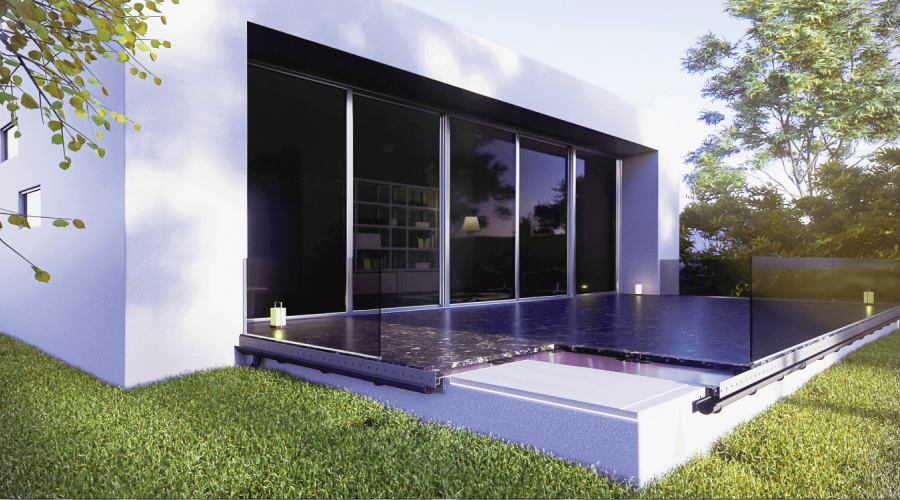
One of the best ideas for terrace flooring is ceramic tiles bonded in tile adhesive. But this method also has its pros and cons. If you opt for ceramic tiles on your terrace, pay particular attention to their specifications. Tiles laid outdoors should meet several requirements: they must be frost-resistant, have a water absorption below 3% and an abrasion resistance of class IV or V. They should also be slip-resistant. One clear advantage of ceramic tiles is that they are easy to look after. They can be laid on both covered and open terraces without any worry that they will lose their colour. However, if you choose this method, there is one thing you must not forget: all tiles bonded in adhesive have to be laid on a perfectly even surface and with the greatest precision. Incorrect installation can quickly lead to damage to the terrace. When laying the tiles, you also need to build in a fall so that water drains away properly. To protect and drain the terrace or balcony properly, you should install drip edge profiles. Among other things, they ensure that no water stands along the edge. They protect balconies and terraces from corrosion and the effects of the weather, and remain robust and durable for years. And last but not least, they enhance the look of your house or flat.
TIMBER DECKING AS TERRACE FLOORING
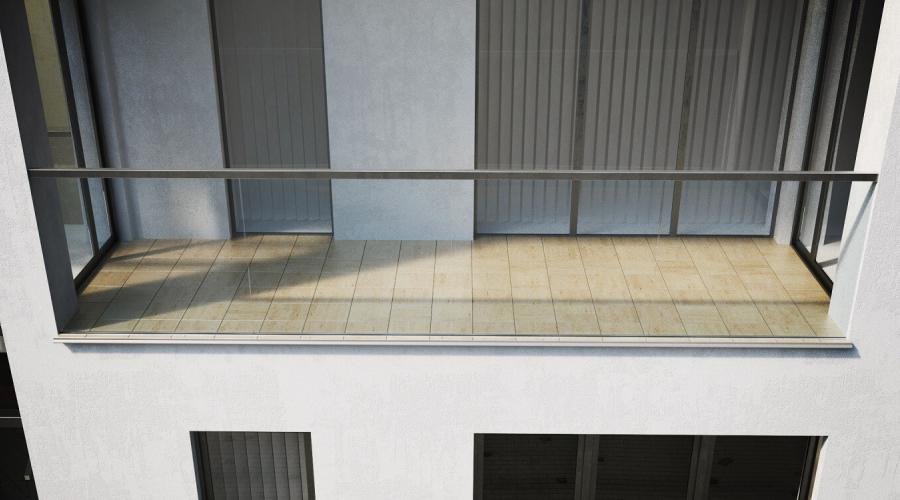
What terrace flooring can you use instead of tiles? Timber decking is a simple, attractive solution that appeals to more than just wood lovers. Decking boards look very similar to ordinary wooden boards, but they offer better properties. They are resistant to moisture and low temperatures, they are slip-resistant, and their specially shaped grooves drain water away effectively. This makes them a very good choice for families with small children and for older people. Laying timber decking on a terrace is quick and straightforward thanks to the system solutions manufacturers offer today. Unfortunately, timber decking also has its drawbacks. The biggest one is the price: it is relatively expensive. In addition, the colour of the boards changes over time (due to sunlight), and on sunny days the floor gets very hot.
RESIN ON THE TERRACE
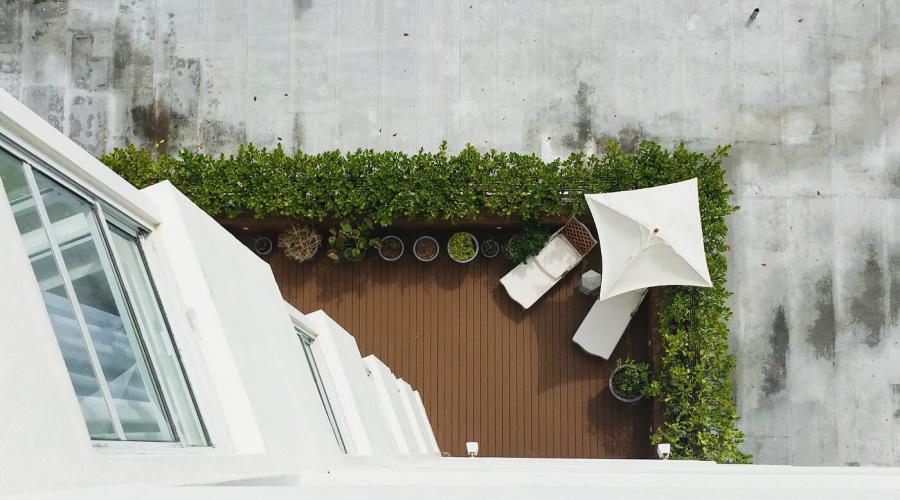
Resin-coated terrace substrates are becoming increasingly popular. What properties does resin have? How is it installed? Who is this floor particularly suitable for? Resin creates a seamless terrace floor and is an alternative to the standard tiled finish. As a floor covering, resin combines waterproofing and an attractive finish in one. For it to do its job, the terrace surface must be prepared carefully and thoroughly. If there are still old tiles or other materials on the terrace floor, remove them first. Then apply a special primer suitable for resin floors. If you are building a new terrace, the screed must be suitably smooth, and priming is necessary here too. Applying resin takes patience. The polyurethane resin is applied in thin layers: the first three layers form the base and the next two a levelling layer. The finished terrace floor is 2–4 mm thick. Quartz sand or aggregate in any colour can be embedded in the resin. The main advantages are: easy maintenance, water resistance and good looks. Unfortunately, epoxy resins are not UV-resistant, so polyurethane or acrylic resins are the better choice.
STONE CARPET FOR TERRACES
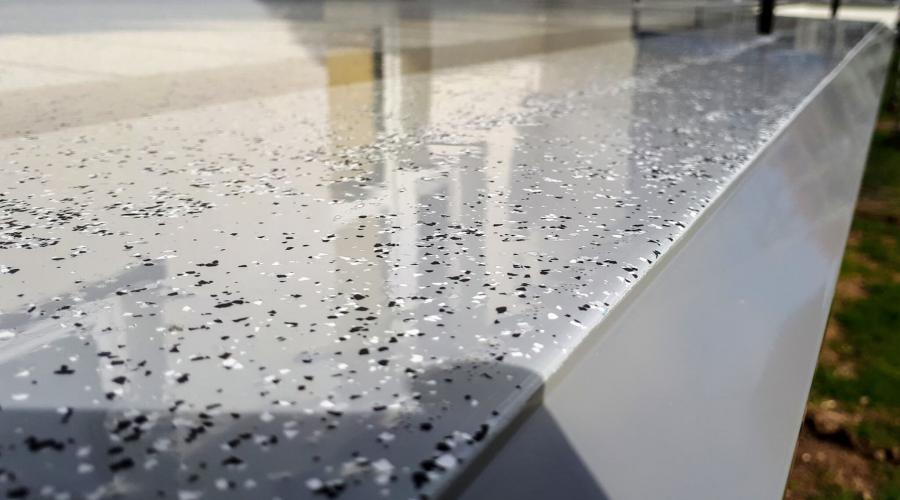
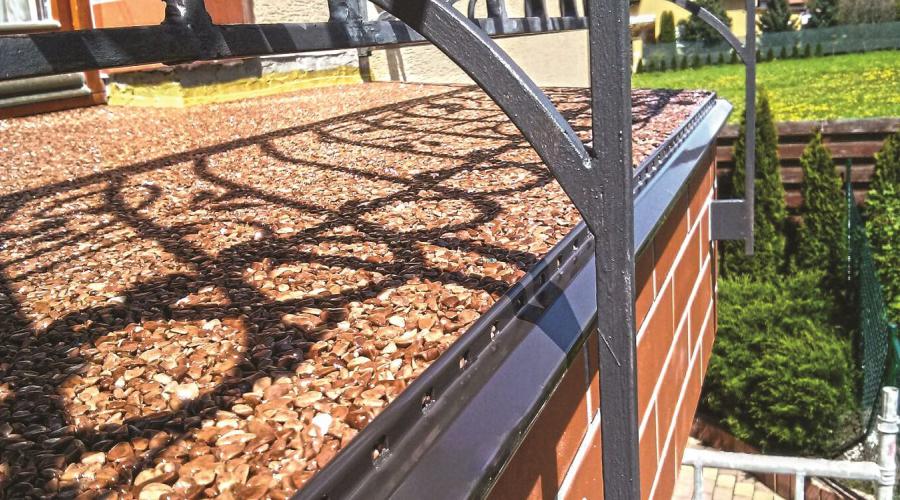
Another option for terrace flooring is the so-called stone carpet, which we touched on in the previous section: fine aggregate, for example quartz or metal, embedded in resin. As there are no joints, the risk of the material cracking is much lower. This technology is resistant to UV radiation and weathering. A further advantage is its resistance to extreme temperatures, from -40 to as much as 80 degrees Celsius. There is a wide choice of patterns and a broad colour palette. If you opt for stone carpet, make sure the edges of the terrace are finished properly. K20 balcony edge profiles are ideal here, as they protect the edge areas well. The downside of stone carpet: it is difficult to clean.
PAVING STONES FOR TERRACES
The last option we look at is terrace flooring made of paving stones. Are paving stones a good idea for your terrace floor? In recent years, paving has come back into fashion. It is an ideal solution for traditional houses. Paved terraces are resistant to weathering and easy to look after. There are many shapes, colours and sizes of paving stone on the market. One drawback of this option is that the stones can get very hot on sunny days.
SUMMARY
As you can see, there are many suggestions and ideas for terrace flooring, and the decision is not an easy one. A terrace has many important functions, so it should be practical and functional. To achieve this, it must be well designed and well built. Your way of life will therefore have the biggest influence on which terrace flooring you choose for your home. Whatever you decide, always use good-quality materials. They ensure that you will be able to enjoy your terrace for many years.